
Our Blog
Tips on daycare, preschool, school readiness, faith and the performing arts from the teachers at Benjamin Preparatory School in Atlanta.

Our Blog
What Is The Best Age To Put A Child In Daycare?
Dr. Verna Benjamin Lambert
Daycare is like a safe and fun place where kids can play, learn, and hang out with other kids. It's helpful for families who need someone to look after their child during the day. But when should your child start? There's no single best age to start daycare. Most children can thrive in a quality program anywhere from 6 weeks old to age 5, and the right time for your family depends on your child's temperament, your work schedule and the quality of the care you can find.
Every stage has real tradeoffs, and once you know them you can make the call with less guilt. Below, we walk through each age, the signs of readiness and how our classes at Benjamin Preparatory School line up.
more
What is an example of a performing arts school?
Dr. Verna Benjamin Lambert
A performing arts school is a school that teaches music, dance, drama or theater as a core part of the day, usually alongside regular academics. Well known examples include The Juilliard School in New York City, Fiorello H. LaGuardia High School of Music & Art and Performing Arts in Manhattan, Interlochen Center for the Arts in Michigan and DeKalb School of the Arts here in metro Atlanta.
Those names cover teens and adults. But performing arts schooling can start much earlier than most parents expect, and for young children it looks very different from an audition based conservatory. Here's how the whole picture fits together.
more
How to choose a daycare?
Dr. Verna Benjamin Lambert
To choose a daycare, start with what your family needs, confirm the program is licensed by Georgia's Department of Early Care and Learning (DECAL), tour it in person and ask direct questions about teachers, safety and the daily routine. The right daycare is the one that's licensed, close enough to keep, run by caring adults you trust and aligned with the values you're raising your child with.
That's the short version. Here's the full checklist we'd hand a friend in Vinings, Smyrna or anywhere in Cobb County who's starting the search.
more
How the Performing Arts Benefits Early Childhood Education?
Dr. Verna Benjamin Lambert
The performing arts help young kids build language skills, social and emotional skills, motor coordination and confidence, and music in particular gives children an early feel for patterns that show up later in math. Music, dance and drama do this by turning learning into something children can hear, move to and act out.
That doesn't mean every toddler needs a stage. It means the songs, movement games and pretend play that young children already love are doing real developmental work. Here's what that work looks like, area by area and age by age.
more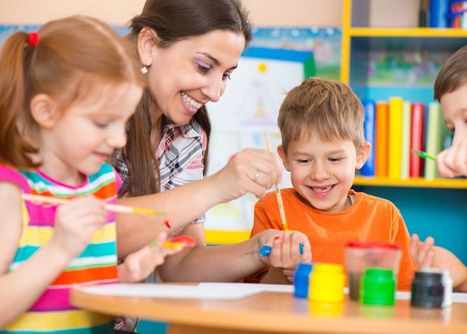
What is daycare, and how important is it?
Dr. Verna Benjamin Lambert
Daycare is supervised care for young children, usually from infancy to about age 5, provided by trained caregivers outside the child's home during the hours parents work or are away. A good daycare does more than keep children safe. It gives them a predictable routine, meals, play and steady relationships with caring adults during the years when the brain grows fastest.
In Georgia, daycare centers are called child care learning centers, and they're licensed by the Georgia Department of Early Care and Learning (DECAL). Below, we'll cover what that looks like day to day, why it matters for development, how daycare compares to preschool and Georgia's Pre-K Program and where it isn't the right fit.
more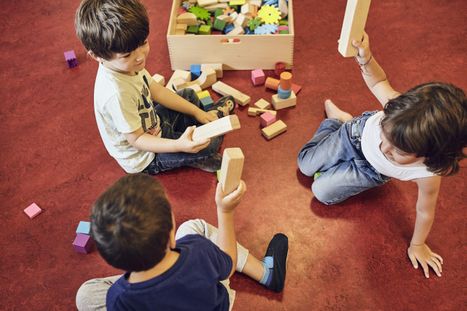
What Schools Offer Early Childhood Education
Dr. Verna Benjamin Lambert
Early childhood education is offered by daycare centers, private preschools, faith based preschools, Montessori and play based schools, Georgia's Pre-K Program, Head Start and public school kindergarten. The biggest differences between them come down to the ages they serve, how they're paid for and what they emphasize during the day.
The terms overlap, and a single school might offer infant care, preschool and early grades under one roof. Here's a plain look at each option.
more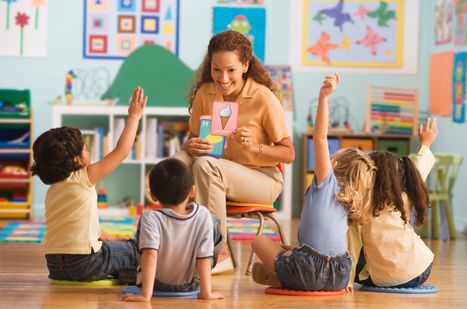
What Factors in Early Childhood Education Contribute to School Readiness
Dr. Verna Benjamin Lambert
A child is usually ready for kindergarten when they can manage their feelings around other kids, follow simple directions, talk in full sentences and handle basic self care like using the bathroom alone. Letters and numbers matter too, but most teachers will tell you the social and emotional skills carry more weight on day one than whether your child can already read.
That's good news, because those skills grow through everyday play, conversation and routine, not flashcards.
more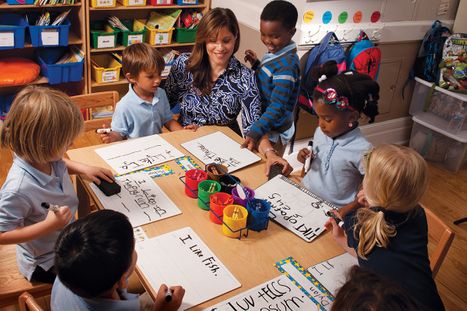
How Long is School for Early Childhood Education
Dr. Verna Benjamin Lambert
Preschool usually starts around age 3, though some programs take children as young as 2 and a half, and most children attend for one to two years before kindergarten. Early childhood education as a whole covers a much longer span, from birth through about age 8, or roughly 2nd grade.
(If you landed here looking for how long a teaching degree takes, this page is about children's schooling instead.) Below we'll walk through the typical ages, how Georgia's Pre-K Program fits in and what a full timeline looks like from infancy to the early grades.
more
How is Success in School Impacted by Early Childhood Education
Dr. Verna Benjamin Lambert
Preschool usually starts around age 3, though some programs take children as young as 2 and a half, and most children attend for one to two years before kindergarten. Early childhood education as a whole covers a much longer span, from birth through about age 8, or roughly 2nd grade.
(If you landed here looking for how long a teaching degree takes, this page is about children's schooling instead.) Below we'll walk through the typical ages, how Georgia's Pre-K Program fits in and what a full timeline looks like from infancy to the early grades.
Yes, a good early childhood education can help children do better in school, and some studies have followed those benefits all the way into adulthood. The biggest gains tend to show up in social skills, language and a child's attitude toward learning, and they depend heavily on the quality of the program.
That last part matters. "Preschool" covers everything from a well run classroom with trained teachers to a room where kids mostly wait for pickup. Below we'll walk through what the research shows, what the benefits look like later in school and what to look for if you want those benefits for your own child.
more
How Do Interactive Babies Work School Assignment in Early Childhood Education?
Dr. Verna Benjamin Lambert
The interactive baby dolls used as school assignments are infant simulators for teenagers, not preschool toys, and they record how well a student cares for them. For young children, the real "interactive baby" is an ordinary baby doll in pretend play, and that simple toy builds empathy, language, daily routines and fine motor skills.
So if you searched this term because an older sibling just came home with a crying robot baby, the first section has your answer. If you're the parent of a toddler or preschooler wondering why your child won't put down their doll, keep reading. That habit is doing more than you might think.
more
The Importance of Performing Arts in Faith-Based Education
Dr. Verna Benjamin Lambert
Liturgical dance is dance performed as part of worship, a way of praising God and expressing faith through movement, often during a church service. Christian schools teach it, along with music and drama, because young children learn Scripture and express their faith best when they can sing it, move to it and act it out.
For a preschooler, faith isn't an abstract idea yet. It's a song about God's love, a Bible story they can play a part in and a dance that says "thank you" without needing big words. Here's what liturgical dance is, where it comes from and how it fits into a faith based preschool.
more
Nurturing Your Child's Faith: Benjamin Preparatory School's Christian Values
Dr. Verna Benjamin Lambert
A Christian preschool is an early learning program that teaches the same skills as any good preschool, like early reading, math and social skills, while building Bible teaching, prayer and Christian values into the daily routine. What makes it different is that faith isn't a separate subject. It shapes how teachers talk with children, how the day is structured and what character traits the school celebrates.
For many families, that's the whole point. You want your child's first school to echo what you teach at home and at church, not compete with it.
more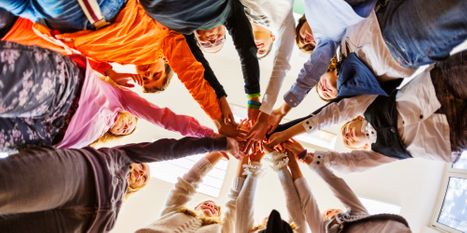
How Benjamin Preparatory School Creates Lifelong Learners
Dr. Verna Benjamin Lambert
STEAM for preschoolers is hands on learning that mixes science, technology, engineering, arts and math into play, like building towers, mixing colors, sorting objects and asking "what happens if?" It doesn't mean worksheets or screens for 3 year olds. It means giving curious kids real things to touch, test and talk about, which is how lifelong learners get their start.
Young children already think like scientists. They drop a spoon off the high chair 20 times to see what happens. STEAM simply gives that curiosity some direction.
more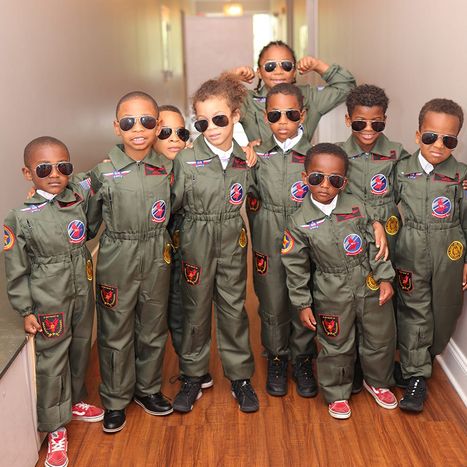
The Power of Play: How Benjamin Preparatory School Incorporates Fun into Learning
Dr. Verna Benjamin Lambert
A play based preschool is an early learning program where children learn mainly through hands on play, like building, pretending, painting, singing and exploring, with teachers guiding the play toward real skills. And yes, learning through play works. The American Academy of Pediatrics says research shows play can improve children's abilities to plan, organize, get along with others and regulate emotions.
That doesn't mean kids just run wild all day. A good play based classroom is carefully set up, and teachers are busy the whole time asking questions, adding new ideas and noticing what each child is ready for next.
more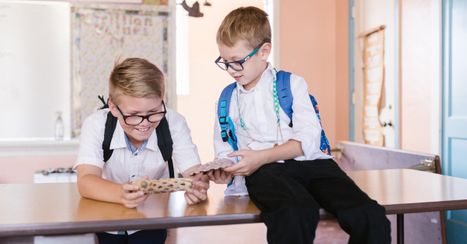
4 Reasons To Enroll Your Child at Benjamin Preparatory School
Dr. Verna Benjamin Lambert
Families in Vinings, Smyrna and northwest Atlanta choose Benjamin Preparatory School because it brings faith, academics and the performing arts together in one school day for children from 6 weeks old through 2nd grade. Our campus at 2445 Church Rd SE, Atlanta, GA 30339 is DECAL licensed, and our teachers are CDA qualified caregivers trained in CPR and First Aid, with background checks for staff.
Here's what sets the school apart.
A Christian school day, not just a Christian label
Benjamin Prep is a non denominational Christian school, and faith is part of the daily routine rather than a once a week add on. Children take part in age appropriate praise, worship and Bible study every day, along with regular chapel services, and our teachers model forgiveness, humility, gratitude and love. You can read more about our Christian foundation and the doctrinal statement our teachers follow.
STEAM+ academics that start early
more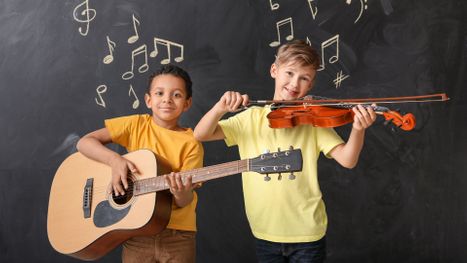
How Benjamin Preparatory School Fosters a Love for the Performing Arts
Dr. Verna Benjamin Lambert
Most toddlers can start a playful dance class around age 2, and many programs offer their first ballet and tap style classes somewhere between 2 and 3. Before that, from about 12 months, music and creative movement (bouncing, marching, copying simple motions) is the usual starting point, and more formal ballet technique tends to wait until about age 5 or later.
So if you're wondering whether your 2 year old is too young for ballet, the honest answer is no, as long as the class is built for 2 year olds. Here's what that looks like, what to expect from a first class and how to tell if your child is ready.
more
Four Reasons Why STEAM Learning Is the Future of Education
Dr. Verna Benjamin Lambert
STEM stands for science, technology, engineering and math. STEAM is the same four subjects with the arts added, so drawing, music, movement, design and storytelling become part of how kids learn science and math rather than a separate class at the end of the week. For young children, most of the time STEAM is the better fit, because the arts give little kids more ways into the same big ideas.
That doesn't mean STEM is wrong or that STEAM is a magic upgrade. It means a 4 year old learns about patterns, shapes and cause and effect through her whole body and imagination, and STEAM makes room for that.
more