The Importance of Performing Arts in Faith-Based Education

Liturgical dance is dance performed as part of worship, a way of praising God and expressing faith through movement, often during a church service. Christian schools teach it, along with music and drama, because young children learn Scripture and express their faith best when they can sing it, move to it and act it out.

For a preschooler, faith isn't an abstract idea yet. It's a song about God's love, a Bible story they can play a part in and a dance that says "thank you" without needing big words. Here's what liturgical dance is, where it comes from and how it fits into a faith based preschool.

students performing science experiments

What is liturgical dance?

Encyclopaedia Britannica defines liturgical dance as dance performed as part of a religious ritual or worship service. In many Christian churches today, it's a planned piece of movement set to a hymn, a worship song or a passage of Scripture, offered as an act of praise rather than a performance for applause.

The focus is the message, not the dancer. Movements often reflect the words of the song: arms lifted for praise, a bowed head for humility, open hands for receiving grace.

Where does liturgical dance come from?

Dance as worship has deep roots. Britannica traces it back to ancient Jewish tradition, where dance was part of festivals and celebrations. The Bible mentions it too. Psalm 150 calls on people to praise God "with timbrel and dancing," and 2 Samuel 6 describes King David "dancing before the Lord with all his might."

Is praise dance the same as liturgical dance?

Mostly, yes. Many churches use "praise dance" and "liturgical dance" to describe the same thing: worship through movement. Some congregations use "liturgical dance" for more formal pieces tied to the church calendar or a service, and "praise dance" for upbeat, joyful movement set to contemporary worship music. For young kids, the difference doesn't matter much. Praise dance for kids is simply a way to worship with their whole bodies.

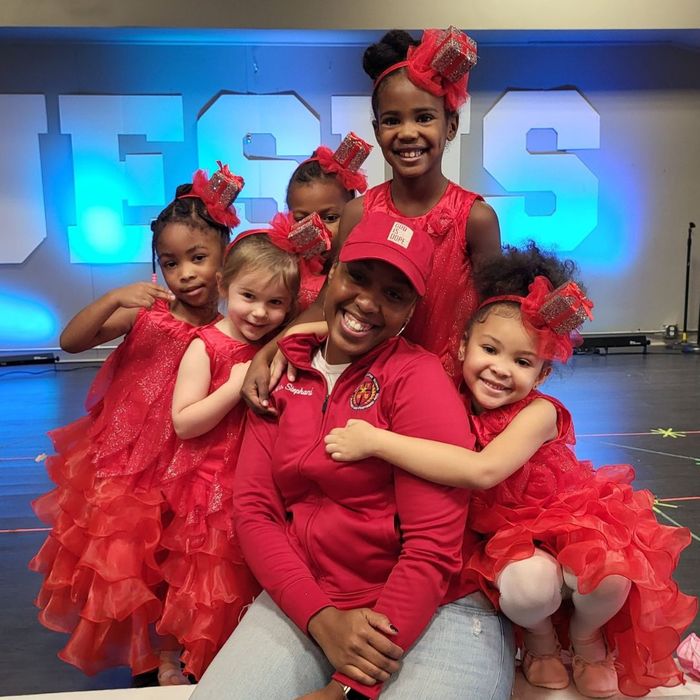
teacher smiling with students in flashy red dresses

Why do Christian schools teach performing arts?

Christian schools teach performing arts because the arts are one of the most natural ways for children to learn and live out their faith. A few reasons stand out.

Music helps Scripture stick. Children memorize songs far more easily than spoken lines. A Bible verse set to a tune can stay with a child for years.

Movement makes faith physical. Young children think with their bodies. Raising hands in praise or kneeling in prayer gives them a concrete way to express something they can't yet explain.

Drama brings Bible stories to life. Acting out Noah's ark or the good Samaritan helps children understand the people, choices and lessons in a story, not just the plot.

Performing together builds community. When children sing or dance in chapel or in a school production, they learn they're part of something bigger than themselves.

NAEYC, the national association for early childhood educators, notes on its music and songs resource page that making music together is a powerful way to connect with others and share cultural knowledge and practices. In a Christian school, that shared practice includes worship.

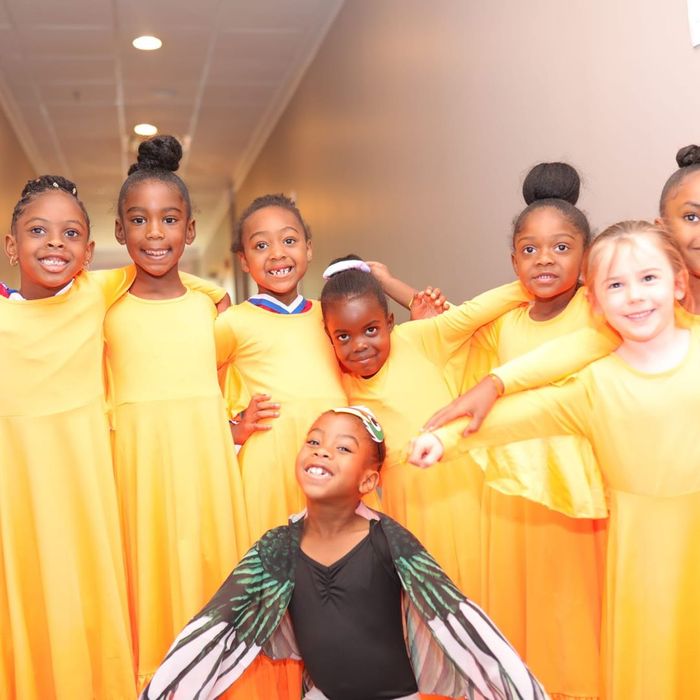
students in bright yellow wing dresses

What children learn from each art form

Art form What children learn Faith connection
Liturgical dance Rhythm, coordination, moving as a group Worshiping God with the whole body
Music and singing Listening, memory, new vocabulary Learning Scripture and praise songs by heart
Drama and Bible stories Speaking, empathy, taking turns Understanding Bible characters and lessons
Chapel and worship Attention, reverence, belonging Praying and praising with a community
Stage productions Confidence, practice, teamwork Sharing faith filled stories with families
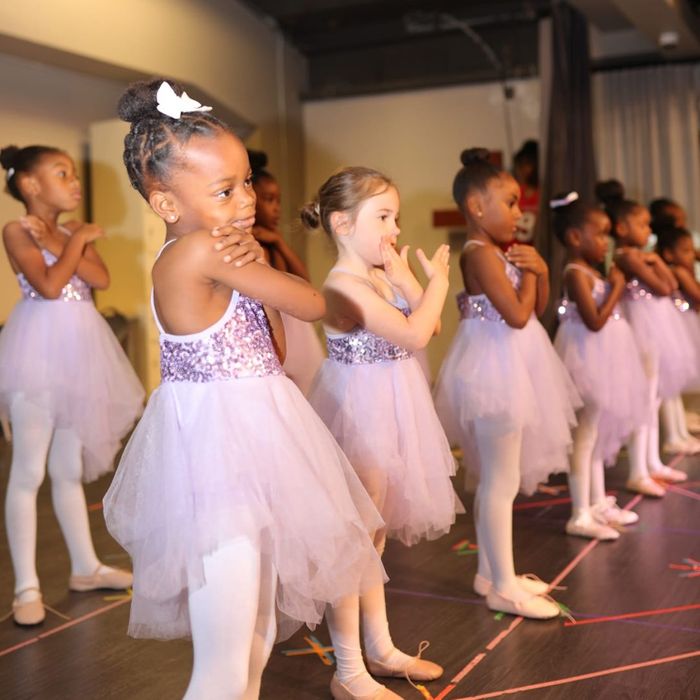
ballet students

What does a faith based preschool do differently with the arts?

In a faith based preschool, the arts aren't separate from faith. They're one of the ways faith gets taught. A ballet class might end with a worship song. A spring show might tell a story of gratitude or forgiveness. Bible time might include acting out a parable.

That said, liturgical dance and church music aren't the whole curriculum, and they shouldn't be. Honestly, young children still need plenty of free play, academics and time outdoors. The arts work best as one strong thread in a full day, not the only one. You can read more about how faith shows up across the day in our post on nurturing your child's faith at a Christian preschool.

How Benjamin Preparatory School teaches liturgical dance and faith through the arts

At Benjamin Prep, faith and the arts go hand in hand. Our performing arts program includes classes in tap, ballet, inspired movement, hip hop, liturgical dance, music and Bible. Liturgical dance and Bible are part of our arts classes, so children experience worship as something they do, not just something they hear about.

Faith is woven into the rest of the day too:

  • Daily praise and worship: age appropriate praise, worship and Bible study are part of every school day.

  • Chapel: children gather for regular chapel services to sing, pray and learn together.

  • Two original productions a year: one in the winter and one in the spring, each written with our current students in mind.

We're a non denominational Christian school, and our Christian foundation shapes how we teach. Our teachers are faith filled educators who follow a written doctrinal statement, and we focus on values like forgiveness, humility, gratitude and love. Families from many church backgrounds in Vinings, Smyrna and across Cobb County feel at home here.

If you're curious about the wider benefits of music, dance and drama, our post on the benefits of performing arts for kids breaks them down by age.

The best way to understand it is to see it. Schedule a tour of our Vinings campus and ask to see a music or dance class.

Frequently asked questions

What is liturgical dance in simple terms?

Liturgical dance is worship through movement. It's dance performed as part of a religious service or ritual, often set to a hymn, worship song or Scripture. In Christian churches, the goal is to praise God, not to entertain an audience.

Is liturgical dance in the Bible?

The term isn't, but dance as worship is. Psalm 150 calls on people to praise God with dancing, and 2 Samuel 6 describes King David dancing before the Lord. Many churches point to these passages as the biblical roots of liturgical dance.

What age can kids start praise dance?

Children can start simple praise movement as toddlers, swaying and clapping to worship songs. Structured liturgical dance works best once children can follow a few steps, often around age 3 or 4. At Benjamin Prep, liturgical dance is part of our performing arts classes.

Do you have to be from a specific church to attend a faith based preschool?

Not at Benjamin Prep. We're a non denominational Christian school, and we welcome families from many church backgrounds. Our faith teaching centers on core Christian values like love, gratitude, humility and forgiveness.

How is liturgical dance different from regular dance class?

Regular dance classes focus on technique and performance. Liturgical dance can use similar steps, but its purpose is worship, and the movements are meant to reflect the words and meaning of the song or Scripture.

Is Benjamin Preparatory School the right fit for your family?

If you want a preschool where your child can worship through liturgical dance, music and Bible stories as part of the regular school day, Benjamin Prep brings faith and the arts together in one place.

Benjamin Preparatory School is a Christian preschool and daycare in the Vinings area of Atlanta at 2445 Church Rd SE, Atlanta, GA 30339, serving children from 6 weeks old through 2nd grade. Each school day blends faith, STEAM+ academics and daily performing arts like tap, ballet, music and drama, and a whole foods menu is included. Families in Vinings, Smyrna, Cumberland, Mableton and northwest Atlanta choose Benjamin Prep so their children can grow in faith, learning and confidence in one place. Families driving in from Marietta or Kennesaw are welcome too, and a tour is the easiest way to see whether the commute and the fit work for you.

Schedule a tour of our Vinings campus, get directions, see our programs by age, or call (770) 436-5200 to talk with our team.

About the author: Dr. Verna Benjamin-Lambert

Dr. Verna R. Benjamin-Lambert, known to families as "Dr. Benji," is the founder of Benjamin Preparatory School, which she started as The Benjamin Preschool of Academic and Performing Arts in Smyrna, Georgia. She holds a doctorate in education leadership from Nova Southeastern University and is a graduate of St. Joseph's Teachers' College in Jamaica. Before founding the school, she served as an administrator in a Georgia school system, where she advocated for students who were falling behind academically.

Dr. Benji is also an author. Her book Health Intelligence: The Path to a Healthier You looks at the core issues behind childhood obesity, and her Healthy Benji children's books help young readers build healthy eating habits. One belief guides every classroom at Benjamin Prep: "Every child has a soul, and every soul has a purpose."

Meet Dr. Benji and browse her books.