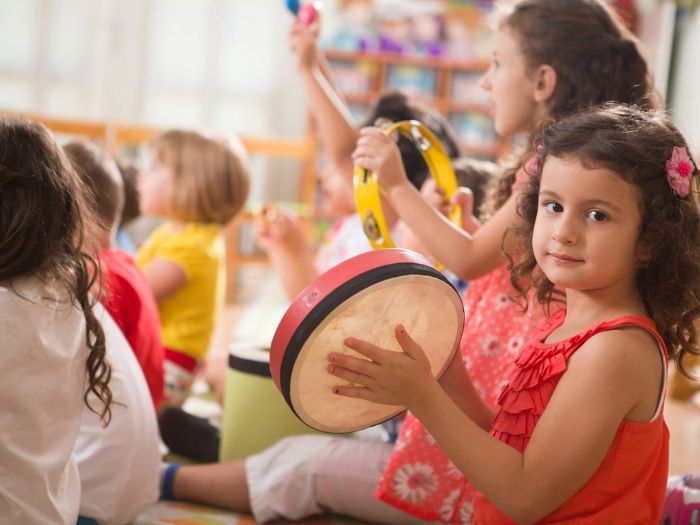
The American Academy of Pediatrics notes on its HealthyChildren.org page about play that activities involving music and art support cognitive, social and emotional and multisensory skills, and it encourages parents to let children sing, dance and move to the beat. NAEYC, the national association for early childhood educators, says on its music and songs resource page that music plays an important role in young children's development and learning.
Here's how those benefits break down.
Language and listening skills
Songs are packed with rhyme, repetition and rhythm, which is exactly how young brains pick up the sounds of language. A toddler who can't say a full sentence can often sing a whole chorus. Drama and pretend play add new vocabulary and practice taking turns in conversation.
Research backs this up. In a study published in the Proceedings of the National Academy of Sciences in June 2018, 4 and 5 year olds in Beijing who took piano lessons for six months got better at telling apart words that differ by a single sound, according to a summary from MIT. The researchers didn't find a change in IQ or attention, so the gain was specific to processing speech sounds. That's a useful, honest finding: music sharpens listening, but it isn't a magic IQ booster.
Social and emotional growth
Group music and dance ask children to wait, watch, follow a cue and move together. Those are early self regulation skills. Drama lets kids try on feelings safely. A child who plays the brave lion or the worried mouse is practicing empathy and naming emotions.
Performing in a group also gives kids a sense of belonging. Everyone has a part, and the show needs all of them.
Motor skills and body awareness
Dance is a full body workout for little ones. Tap builds rhythm and foot coordination. Ballet builds balance, posture and control. Hip hop and creative movement build big, joyful gross motor skills. Even infants benefit from bouncing to a beat, shaking an instrument and reaching for sounds.
Over time, kids learn where their bodies are in space, which helps with everything from climbing stairs to sitting still at a table.
Confidence and self expression
Standing up to sing a line or take a bow is a big deal at age 4. Small, supported moments on stage teach kids that they can be seen and heard, and that mistakes are part of practice. In our experience, the quiet child who whispers a line in September often surprises everyone by spring.
Early math through music
Music is full of patterns. Counting beats, clapping rhythms, repeating a verse and noticing high and low notes all give children hands on practice with sequence, pattern and counting. It's not a replacement for math lessons, but it's a friendly first step into the way math thinks.