How Benjamin Preparatory School Fosters a Love for the Performing Arts

Most toddlers can start a playful dance class around age 2, and many programs offer their first ballet and tap style classes somewhere between 2 and 3. Before that, from about 12 months, music and creative movement (bouncing, marching, copying simple motions) is the usual starting point, and more formal ballet technique tends to wait until about age 5 or later.

So if you're wondering whether your 2 year old is too young for ballet, the honest answer is no, as long as the class is built for 2 year olds. Here's what that looks like, what to expect from a first class and how to tell if your child is ready.

1.jpg

What age can toddlers start ballet?

There's no single official starting age, but dance schools tend to follow a similar pattern. The Royal Academy of Dance, one of the largest dance teaching organizations in the world, offers an early years curriculum called Dance to Your Own Tune for children from 2 and a half to 5 years, according to its syllabus page. Its graded ballet syllabus, where children start learning set technique, is listed for ages 5 and up.

University programs look similar. The University of Iowa's youth dance program, for example, describes its classes for young children as starting with an introduction to dance for children around ages 2 to 4, with parents joining in. Creative movement follows at 4 and 5, and its pre ballet class begins at age 6.

That's a useful reality check. "Toddler ballet" is really a gentle introduction to ballet: music, movement, a few positions and a lot of play. Nobody is expecting pirouettes from a 2 year old.

2.jpg

When can toddlers start tap dance?

Tap usually starts around the same time as early ballet, often between 2 and 3. Tap is a natural fit for toddlers because the shoes make noise. A child who stomps hears the sound right away, and that instant feedback makes rhythm something they can actually hear and feel.

Early tap classes focus on marching, stomping, toe taps and heel taps, mostly in time with a song. In many programs, toddlers take ballet and tap together in one class, which keeps things moving and keeps attention spans happy.

3.jpg

What do toddler dance classes look like?

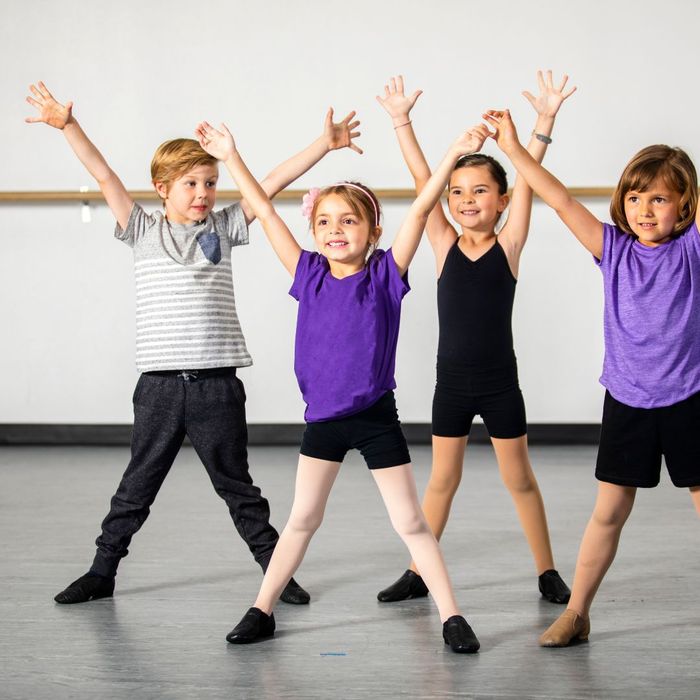
A good toddler dance class looks a lot more like structured play than a rehearsal. Expect some wiggling, wandering and at least one child lying on the floor. That's normal.

Here's what usually happens in dance classes for toddlers:

  • Warm up songs. Simple action songs that get bodies moving and signal that class is starting.

  • Imitation games. The teacher moves and the kids copy. Copying is how toddlers learn almost everything, from words to dance steps.

  • Movement games. Tiptoeing like mice, stomping like elephants, freezing when the music stops.

  • A few real steps. First ballet positions, pointing and flexing feet, and tap sounds like toe and heel.

Toddler attention spans are short, so classes switch activities often. The goal isn't perfect form. It's getting children to listen, move and join a group.

Is ballet good for toddlers?

Yes, when it's age appropriate. Dance gives toddlers practice with balance, coordination and body awareness, and following the teacher builds listening skills. The American Academy of Pediatrics encourages parents of children ages 1 to 3 to sing songs, play rhythms and encourage moving to the beat, according to its HealthyChildren.org page on the power of play. The same page notes that music and art support cognitive, social and emotional and multisensory skills.

Want the bigger picture on how music, dance and drama help young kids grow? Our post on the benefits of performing arts for young children breaks it down by developmental area.

4.jpg

Toddler dance by age, and how it works at Benjamin Prep

Dance at 15 months looks very different from dance at 4. The table below shows what's typical at each stage and how it maps to our classes.

Age What dance usually looks like Benjamin Prep class
12 to 24 months Music and creative movement: bouncing, marching, clapping, copying simple motions Tiny Tappers: early music plus beginning dance and athletic instruction
2 to 3 years First ballet and tap: positions, toe and heel taps, movement games, following a teacher Tip Top Toddlers: first tap and ballet classes
3 to 5 years Short routines, more steps, dancing as a group, first time on stage Shooting Stars (3 to 4) and Show Kids (4 to 5): dance plus stage performance, and Show Kids perform several times a year

You can see what every class covers on our Children Served page, and our toddler program page explains how dance fits alongside reading readiness, early math and faith in the toddler years.

Contact Us Today

Signs your toddler is ready for a dance class

Age matters less than a few simple skills. Your toddler is probably ready if they:

  1. Walk and run steadily, and can try a jump or a march.

  2. Can follow a one step direction like "touch your toes" or "stand up."

  3. Like music and move when they hear it.

  4. Can stay with a group activity for a little while, even if they drift in and out.

If your child isn't there yet, that's fine. In our experience, a few months can make a big difference at this age. Dancing in the kitchen counts as practice.

What should toddlers wear to ballet and tap?

Keep it simple and comfortable. Most toddler dance classes ask for:

  • A leotard, or comfortable clothes they can stretch and bend in

  • Ballet slippers for ballet, and tap shoes for tap

  • Hair pulled back off the face if it's long

Avoid anything with buttons, belts or long skirts that tangle. Ask the program before you buy shoes, since some want a particular style.

Should toddler dance feel like play or practice?

It should feel like play. Honestly, if a toddler class is all drills and correcting feet, it's probably not built for toddlers. Young children learn best when they're having fun and taking part, and pushing technique too early can turn dance into a chore.

That's also why we don't think every toddler needs a dance class. Some kids get plenty of movement from free play, and a child who hates class at 2 might love it at 3. Follow your child's lead.

Dance during the school day vs. a separate studio

For a lot of working parents, the hardest part of toddler ballet isn't the ballet. It's getting there. Most studio classes happen in the late afternoon or on weekends, which means leaving work early, fighting traffic and getting a tired toddler into tights.

At Benjamin Preparatory School, dance happens during the school day. Our performing arts classes include tap, ballet, inspired movement, hip hop and liturgical dance, and children take part in two original productions every year, one in winter and one in spring. Extracurricular activities are included in the cost of tuition, so families in Vinings, Smyrna and Cumberland don't need to book a separate studio after work.

Faith is part of how we teach movement too. Our post on liturgical dance and faith based arts explains how dance becomes a way for children to worship. For older kids, our after school performing arts program keeps dance going past the early years.

The best way to see a toddler dance class is in person. Book a tour of our Vinings campus and watch our classrooms in action.

Frequently asked questions

What is the best age to start ballet?

Many children start a playful ballet class around 2 or 3, and more formal ballet technique usually begins around 5 or 6. The Royal Academy of Dance's early years curriculum covers ages 2 and a half to 5, and its graded ballet syllabus starts at 5 and up.

Can a 2 year old do ballet?

Yes, in a class designed for toddlers. At 2, ballet means music, movement games, imitation and a few simple positions. It won't look like a recital, and it shouldn't.

Is tap or ballet better for toddlers?

Neither is better, and many toddler classes mix the two. Tap gives instant sound feedback that helps with rhythm, while ballet works more on balance and control. Let your child try both and see what they enjoy.

What if my toddler won't participate in dance class?

That's common, especially in the first few weeks. Many toddlers watch before they join in, and watching is still learning. If your child stays unhappy after several classes, it may be worth waiting a few months and trying again.

Do toddlers need dance shoes?

Usually, yes, though requirements vary. Ballet slippers help with grip and pointing feet, and tap shoes make the sounds that tap is built on. Check with the program before buying.

Is Benjamin Preparatory School the right fit for your family?

If you'd love for your toddler to start ballet and tap without adding another drive across town after work, Benjamin Prep builds dance right into the school day.

Benjamin Preparatory School is a Christian preschool and daycare in the Vinings area of Atlanta at 2445 Church Rd SE, Atlanta, GA 30339, serving children from 6 weeks old through 2nd grade. Each school day blends faith, STEAM+ academics and daily performing arts like tap, ballet, music and drama, and a whole foods menu is included. Families in Vinings, Smyrna, Cumberland, Mableton and northwest Atlanta choose Benjamin Prep so their children can grow in faith, learning and confidence in one place. Families driving in from Marietta or Kennesaw are welcome too, and a tour is the easiest way to see whether the commute and the fit work for you.

Schedule a tour of our Vinings campus, get directions, see our programs by age, or call (770) 436-5200 to talk with our team.

About the author: Dr. Verna Benjamin-Lambert

Dr. Verna R. Benjamin-Lambert, known to families as "Dr. Benji," is the founder of Benjamin Preparatory School, which she started as The Benjamin Preschool of Academic and Performing Arts in Smyrna, Georgia. She holds a doctorate in education leadership from Nova Southeastern University and is a graduate of St. Joseph's Teachers' College in Jamaica. Before founding the school, she served as an administrator in a Georgia school system, where she advocated for students who were falling behind academically.

Dr. Benji is also an author. Her book Health Intelligence: The Path to a Healthier You looks at the core issues behind childhood obesity, and her Healthy Benji children's books help young readers build healthy eating habits. One belief guides every classroom at Benjamin Prep: "Every child has a soul, and every soul has a purpose."

Meet Dr. Benji and browse her books.