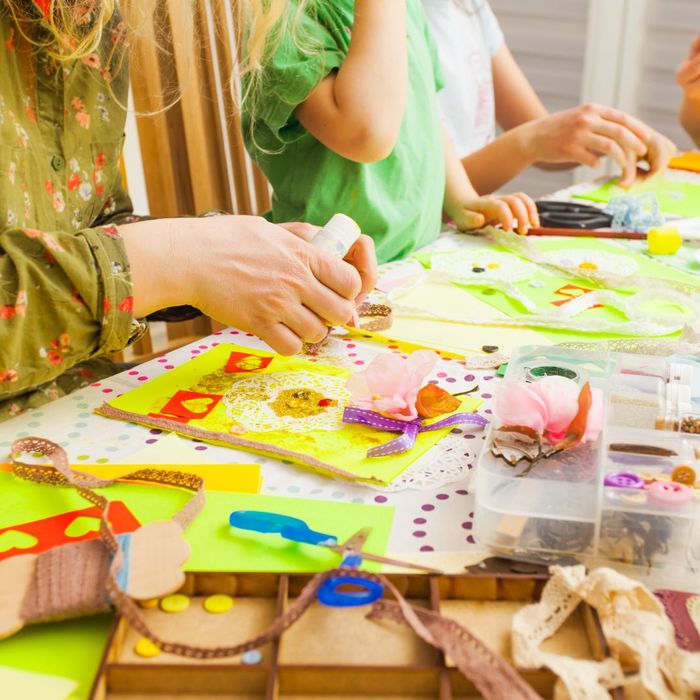
Four Reasons Why STEAM Learning Is the Future of Education

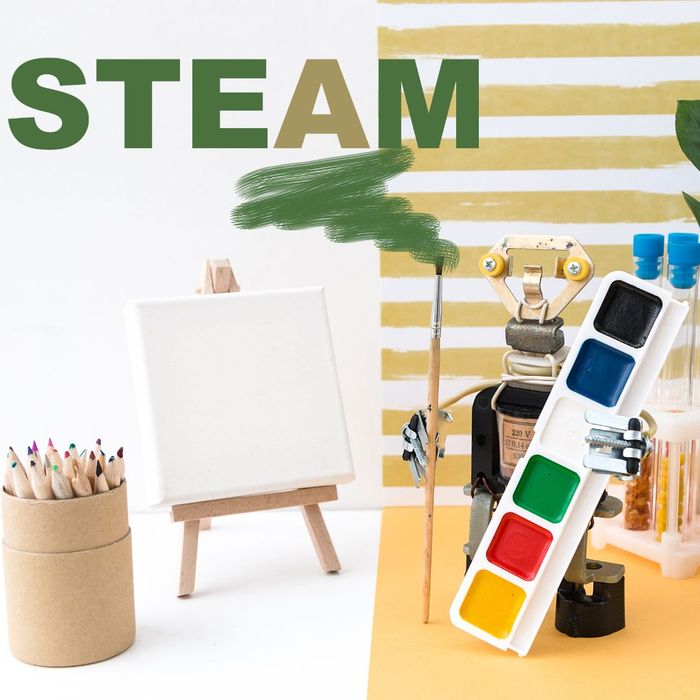
STEM stands for science, technology, engineering and math. STEAM is the same four subjects with the arts added, so drawing, music, movement, design and storytelling become part of how kids learn science and math rather than a separate class at the end of the week. For young children, most of the time STEAM is the better fit, because the arts give little kids more ways into the same big ideas.

That doesn't mean STEM is wrong or that STEAM is a magic upgrade. It means a 4 year old learns about patterns, shapes and cause and effect through her whole body and imagination, and STEAM makes room for that.
1.jpg

What is the difference between STEM and STEAM?

The difference is one letter, but it changes how lessons are built. A STEM lesson asks kids to observe, measure, build and solve. A STEAM lesson asks them to do the same things and then design, express or communicate what they found.

Say preschoolers build a ramp and see which toy car rolls farthest. That's STEM. Add drawing the ramp or making up a song about fast and slow, and it's STEAM. Same science, more ways in.

Where do the arts fit in STEAM?

The arts show up in a few practical places:

  • Design: Planning how something should look and work before building it. Engineers sketch. So do 4 year olds with crayons.

  • Creativity: Coming up with more than one answer. A block bridge can be built ten different ways, and art teaches kids that's normal.

  • Communication: Explaining an idea out loud, in a picture or on a stage. A child who can describe why her tower fell is doing real science.

  • Patterns and rhythm: Music and dance are full of counting, sequencing and repeating patterns, which is early math in disguise.

Honestly, for children under 6, the line between art and science is blurry to begin with. Mixing paint is color science. Clapping a rhythm is counting.

2.jpg

Where did STEM and STEAM come from?

The acronym STEM is fairly new. According to ATE Central, a National Science Foundation funded resource, Judith Ramaley, then an assistant director at the NSF, suggested "STEM" in the fall of 2001 to replace the older acronym SMET.

STEAM followed about a decade later. In January 2011, the Rhode Island School of Design hosted an NSF funded workshop called STEM to STEAM, led by RISD professor Christopher Rose, that brought together leaders from the arts and sciences to explore how art and design thinking could strengthen STEM, as reported by Rhode Island NSF EPSCoR.

3.jpg

STEM vs STEAM vs STEAM+: a side by side comparison

Here's how the three approaches compare for young children. STEAM+ is the name of our approach at Benjamin Preparatory School.

STEM STEAM STEAM+ at Benjamin Prep
Subjects Science, technology, engineering, math STEM plus the arts STEAM, examined through the lens of scripture
Main goal Problem solving and technical skills Problem solving plus creativity and expression Problem solving, creativity and a biblical worldview
Typical preschool activity Build a ramp and measure how far cars roll Build the ramp, then draw it or make up a song about it Science and cooking experiments for our Creation Station cooking show
Role of the arts Usually separate Woven into lessons Woven in, plus daily performing arts
Big question kids explore How does it work? How does it work, and how can I show it? How does it work, and who made it?

The STEM and STEAM columns describe general approaches. Schools use both terms in different ways, so ask what they actually look like day to day.

4.jpg

Is STEAM better than STEM for young children?

For preschool and early elementary, STEAM is usually a better fit. Young kids learn best by doing, moving and making, and the arts give them extra entry points. A child who isn't interested in counting blocks might happily count beats in a song or shapes in a painting.

As kids get older, the answer gets more personal. Some light up with pure math and coding, while others need a creative hook.

The honest debate: does STEAM water down STEM?

Some educators and scientists worry that adding the arts can dilute STEM. Their concern is fair. If "STEAM" just means gluing glitter on a worksheet, kids lose time on real math and science without gaining real art skills either. Critics also point out that adding a letter doesn't fix weak teaching.

Supporters answer that art done well isn't decoration. Design, sketching and clear communication are part of how engineers and scientists actually work, and creative confidence helps kids stick with hard problems.

In our experience, both sides have a point. The label matters less than the lesson. A good STEAM classroom still counts, measures and tests ideas, and the arts make that work deeper, not softer. When you tour a school, ask to see what a STEAM lesson looks like in practice.

What does STEM or STEAM look like in a preschool classroom?

At this age, neither one means lectures or long screen time. Both should be hands on and short, built around play. Our post on what STEAM looks like for preschoolers has a full list of simple activities by letter, and our article on learning through play explains why play is the delivery method for early learning.

Here's a quick comparison of how the same topic might look in each approach:

  1. Floating and sinking. STEM: test which objects float. STEAM: test them, then paint a picture of what floated and tell the class why.

  2. Shapes. STEM: sort blocks by shape. STEAM: sort them, then build a shape city and name the streets.

  3. Sound. STEM: compare loud and soft sounds. STEAM: make simple instruments and play a fast song and a slow one.

  4. Plants. STEM: water seeds and measure growth. STEAM: measure, then draw the plant each week like a picture journal.

What about early elementary?

In 1st and 2nd grade, STEAM can get more structured. Kids can follow simple experiment steps, record results in drawings or short sentences and present what they learned. The arts piece often becomes about communication: explaining a project to classmates or performing it for families.

Contact Us

Why is STEAM education important?

STEAM matters because it builds the habits kids need in every subject: asking questions, testing ideas, trying again and explaining their thinking. The arts add confidence and voice. A child who learns to stand up and share her idea in preschool is practicing something she'll use for years.

If you'd like to see this in action, book a tour of our Vinings campus and ask to see Creation Station.

How does STEAM+ work at Benjamin Preparatory School?

At Benjamin Prep, our STEAM+ approach covers science, technology, engineering, arts and math, and the plus means we examine those subjects through the lens of scripture. Children learn how creation works and who made it.

Here's what that looks like:

  • Creation Station: Students experiment with science and cooking for a school run weekly cooking show. It's measuring, mixing, observing and performing all at once.

  • Computer lab: Children use learning games in our computer lab, which gives them a guided introduction to technology.

  • Daily performing arts: Our performing arts program includes tap, ballet, inspired movement, hip hop, liturgical dance, music and Bible, so the A in STEAM gets real time every day.

STEAM+ is one part of our Christ centered, research driven academics, which also include a bilingual curriculum and daily athletics. Families looking at our play based preschool in Atlanta will see STEAM+ woven through the day rather than saved for one special class.

Frequently asked questions

What is the main difference between STEM and STEAM?

STEAM adds the arts to science, technology, engineering and math. In practice, that means kids design, create and communicate as part of their science and math work, not just observe and solve.

Is STEAM or STEM better for preschoolers?

STEAM is usually the better fit for preschoolers because music, drawing and movement give young children more ways to learn the same concepts. Both work well when lessons are hands on and play based.

Does STEAM take time away from math and science?

It shouldn't. A well taught STEAM lesson still counts, measures and tests ideas. The concern is fair when "arts" means decoration instead of design, so look at what lessons actually include.

When did STEAM start?

STEM was named in 2001, and the STEM to STEAM movement gained momentum around 2011, when the Rhode Island School of Design hosted an NSF funded workshop on adding art and design to STEM.

What is STEAM+?

STEAM+ is Benjamin Prep's approach. It covers science, technology, engineering, arts and math through the lens of scripture, with programs like Creation Station and a computer lab with learning games.

Is Benjamin Preparatory School the right fit for your family?

If you want your child to learn science and math by building, cooking, singing and dancing, with faith at the center, our STEAM+ classrooms were made for curious kids like yours.

Benjamin Preparatory School is a Christian preschool and daycare in the Vinings area of Atlanta at 2445 Church Rd SE, Atlanta, GA 30339, serving children from 6 weeks old through 2nd grade. Each school day blends faith, STEAM+ academics and daily performing arts like tap, ballet, music and drama, and a whole foods menu is included. Families in Vinings, Smyrna, Cumberland, Mableton and northwest Atlanta choose Benjamin Prep so their children can grow in faith, learning and confidence in one place. Families driving in from Marietta or Kennesaw are welcome too, and a tour is the easiest way to see whether the commute and the fit work for you.

Schedule a tour of our Vinings campus, get directions, see our programs by age, or call (770) 436-5200 to talk with our team.

About the author: Dr. Verna Benjamin-Lambert

Dr. Verna R. Benjamin-Lambert, known to families as "Dr. Benji," is the founder of Benjamin Preparatory School, which she started as The Benjamin Preschool of Academic and Performing Arts in Smyrna, Georgia. She holds a doctorate in education leadership from Nova Southeastern University and is a graduate of St. Joseph's Teachers' College in Jamaica. Before founding the school, she served as an administrator in a Georgia school system, where she advocated for students who were falling behind academically.

Dr. Benji is also an author. Her book Health Intelligence: The Path to a Healthier You looks at the core issues behind childhood obesity, and her Healthy Benji children's books help young readers build healthy eating habits. One belief guides every classroom at Benjamin Prep: "Every child has a soul, and every soul has a purpose."

Meet Dr. Benji and browse her books.